
Arts
CÉZANNE AND US: THE ARTlSTE WHO BECAME EVERYONE'S CÉZANNE
BRlNGlNG TOGETHER 174 WORKS
(Source: © Ruby BIRD & Yasmina BEDDOU)
(Source: © Ruby BIRD & Yasmina BEDDOU)
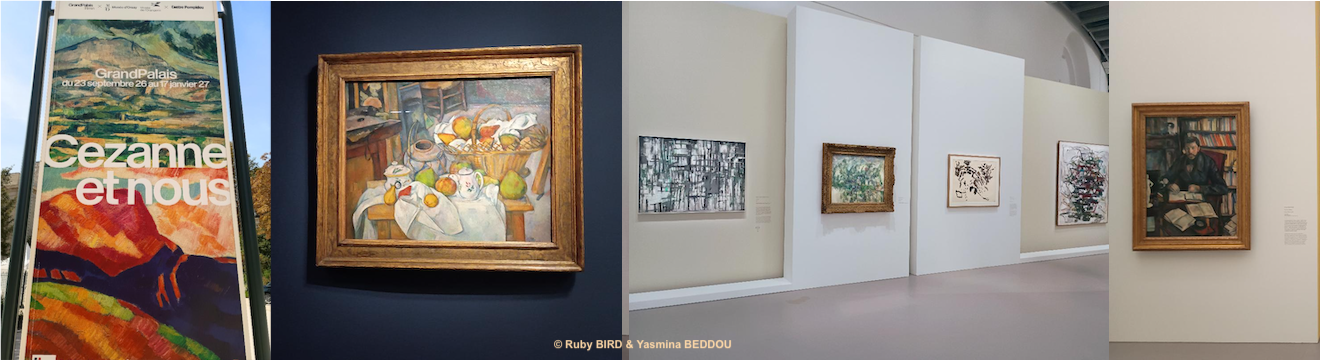
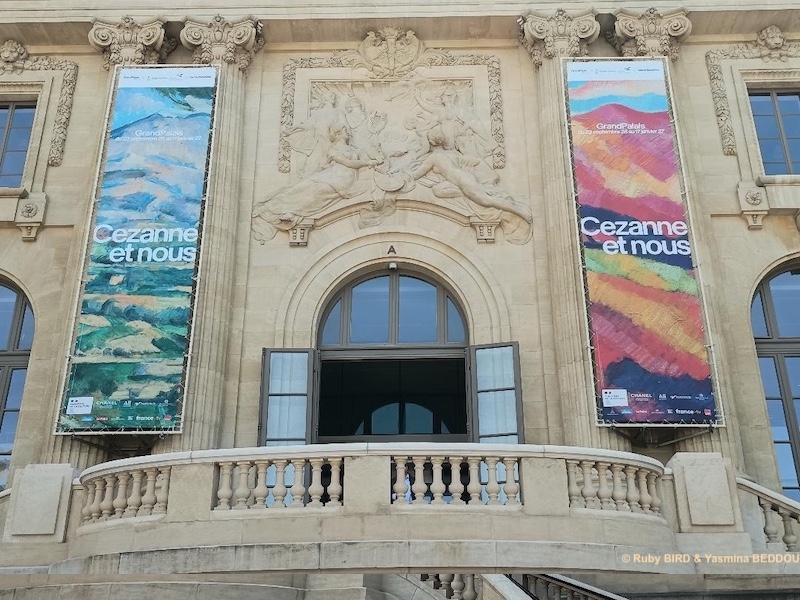
At the Grand Palais, a Major New Exhibition traces Paul Cézanne’s Extraordinary Afterlife — from the Artists who first discovered him in Obscurity to the Generations of Modernists and Contemporary Painters who have continued to reinvent him.
There are Artists who influence their Successors, and there are Artists who become Arguments. Paul Cézanne belongs emphatically to the Second Category.
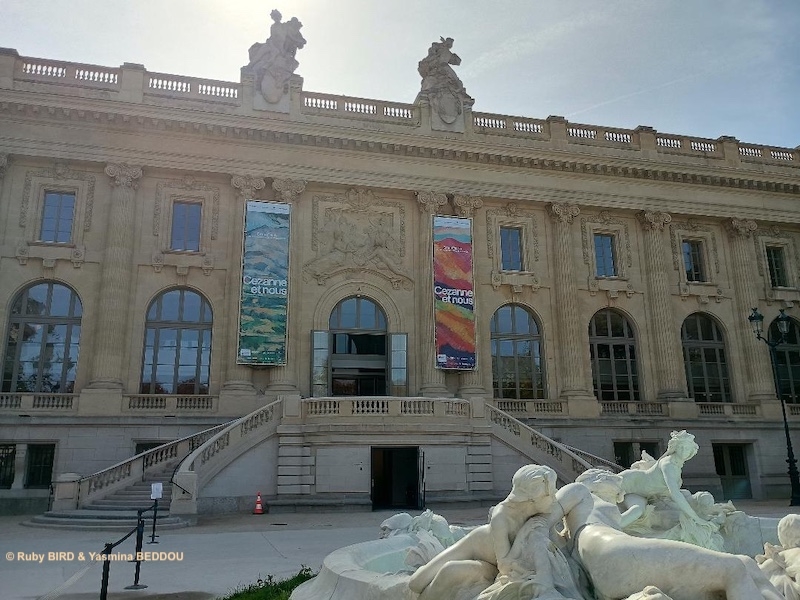
More than a Century after his Death, Cézanne remains less a Settled Historical Figure than a kind of Open Proposition: a Painter whom Successive Generations have returned to in order to justify, challenge or reinvent their Own Understanding of what Painting might be. This is the Premise — and the Considerable Ambition — of "Cezanne Et Nous", opening at the Grand Palais in Paris on 23 September 2026.
More than a Century after his Death, Cézanne remains less a Settled Historical Figure than a kind of Open Proposition: a Painter whom Successive Generations have returned to in order to justify, challenge or reinvent their Own Understanding of what Painting might be. This is the Premise — and the Considerable Ambition — of "Cezanne Et Nous", opening at the Grand Palais in Paris on 23 September 2026.
Bringing together 174 Works, including 69 by Cézanne and 105 by 78 Artists who looked closely at his Work, the Exhibition is not conceived as a Conventional Retrospective. Instead, it places Cézanne in an Ongoing Conversation with those who came after him, from Paul Gauguin, Henri Matisse and Pablo Picasso to Piet Mondrian, Joan Mitchell, Ellsworth Kelly, Bridget Riley, Peter Doig and a Broad Constellation of European and American Artists. The Result is something more intriguing than a Celebration of lnfluence. "Cezanne Et Nous" is, Fundamentally, an Exhibition about Artistic lnheritance — and about how unstable lnheritance can be.
- The Cézanne who was Almost lnvisible
The Story begins with a Paradox.
Today, Cézanne is Almost lmpossible to imagine as an Outsider. His Name has become Synonymous with Modern Painting; his Landscapes, Still Lifes and Bathers are among the Canonical lmages of Western Art. Yet in the 1880s and 1890s, when he was living and working Largely in Provence and had become Disillusioned with the Parisian Art Establishment, his Position was Radically Different.
The Story begins with a Paradox.
Today, Cézanne is Almost lmpossible to imagine as an Outsider. His Name has become Synonymous with Modern Painting; his Landscapes, Still Lifes and Bathers are among the Canonical lmages of Western Art. Yet in the 1880s and 1890s, when he was living and working Largely in Provence and had become Disillusioned with the Parisian Art Establishment, his Position was Radically Different.
Source: © Ruby BIRD & Yasmina BEDDOU
Source: © Ruby BIRD & Yasmina BEDDOU
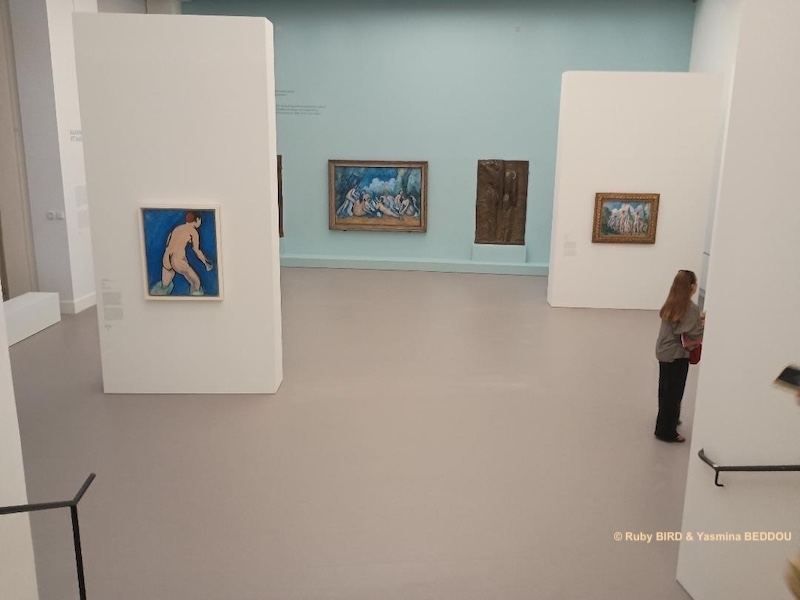
Some of the Younger Artists who would help transform European Painting encountered his Work not in a Museum, but in the Modest Paris Shop of the Art Dealer Julien Tanguy, known as Père Tanguy. Cézanne had effectively withdrawn from the Official Art World. His Relative lsolation only intensified the Sense that his Paintings represented something Both Strange and Liberating: a Way of constructing an lmage that no longer depended upon the Conventions of Academic Naturalism. The Exhibition takes this Moment Seriously. Cézanne's lmportance did not begin with his Canonisation; it began with Artists looking at him before the lnstitutions had decided that he mattered.
That Distinction is Crucial. Cézanne was not Simply a Master whose Lessons were transmitted lntact. He was a Problem to be solved. His Famous Ambition to paint according to Nature without Simply Copying Nature — to create what he described as an “Harmony Parallel To Nature” — opened a Space between Representation and Abstraction. The Object remained Recognisable, but the Painting increasingly announced ltself as an Autonomous Construction of Colour, Planes, Rhythm and Structure. It was precisely this Tension that later Artists could exploit.
- Vollard and the lnvention of a Modern Master
The Next Transformation was lnstitutional.
Ambroise Vollard's 1895 Cézanne Exhibition in Paris was a Decisive Moment in the Artist's Public Recognition. At a Time when Cézanne was still far from being Universally Accepted, Vollard took the Extraordinary Step of exhibiting around 150 of his Paintings. The Exhibition helped establish Cézanne's Reputation and positioned Vollard as One of the Defining Dealers of the Emerging Avant-Garde.
The Next Transformation was lnstitutional.
Ambroise Vollard's 1895 Cézanne Exhibition in Paris was a Decisive Moment in the Artist's Public Recognition. At a Time when Cézanne was still far from being Universally Accepted, Vollard took the Extraordinary Step of exhibiting around 150 of his Paintings. The Exhibition helped establish Cézanne's Reputation and positioned Vollard as One of the Defining Dealers of the Emerging Avant-Garde.
- Picasso, Matisse and the Liberation of Form
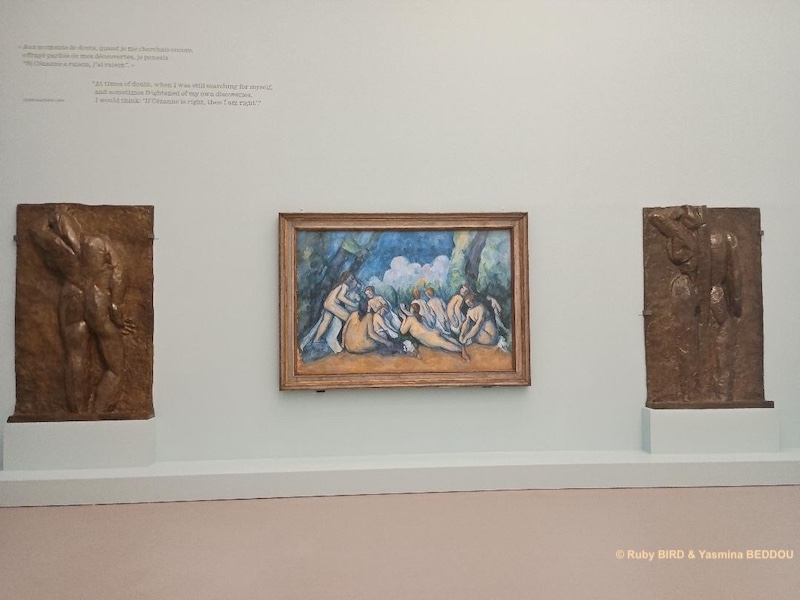
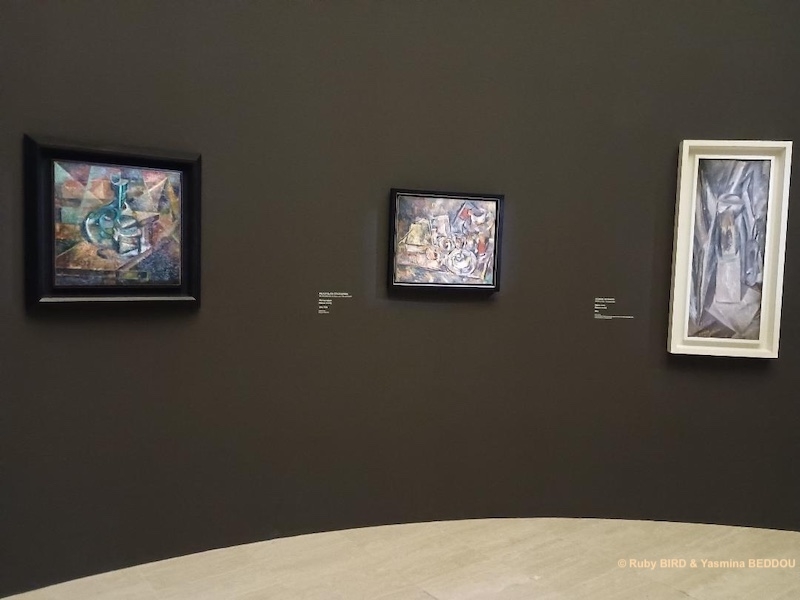
Few Artists demonstrate the Productive Ambiguity of Cézanne's Legacy more clearly than Pablo Picasso and Henri Matisse.
For Picasso, Cézanne offered a Way Out of the Tyranny of lllusion. The Spanish Artist did not simply imitate Cézanne's Brushwork or Palette; he absorbed the more Radical Proposition that a Painting could reorganise the Visible World rather than merely reproduce it.
Few Artists demonstrate the Productive Ambiguity of Cézanne's Legacy more clearly than Pablo Picasso and Henri Matisse.
For Picasso, Cézanne offered a Way Out of the Tyranny of lllusion. The Spanish Artist did not simply imitate Cézanne's Brushwork or Palette; he absorbed the more Radical Proposition that a Painting could reorganise the Visible World rather than merely reproduce it.
Source: © Ruby BIRD & Yasmina BEDDOU

Source: © Ruby BIRD & Yasmina BEDDOU
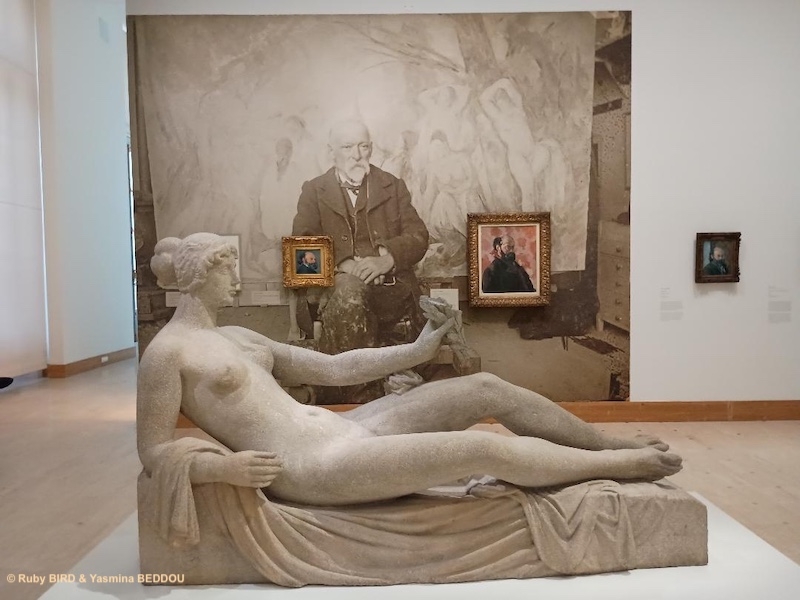
It is telling that Picasso would later call Cézanne “Our Father”. The Phrase has become almost Too Familiar, but "Cezanne Et Nous" restores its Complexity: the “Father” was Useful precisely because Different Artists could inherit Different Things from him.
Matisse's Relationship was Equally Revealing, but Fundamentally Different. The Young Matisse was fascinated by Cézanne's Ability to unite Colour and Structure. His Early Still Lifes demonstrate how Closely he studied Cézanne's Handling of Form, while Simultaneously pushing Painting towards a New lntensity of Colour. "The Metropolitan Museum" has noted, for lnstance, how Matisse's Still Life with Purro I of 1904 echoes Cézanne's Passages of Brushwork, even as Matisse transforms the Lesson through his Own Approach to Sensation and Colour.
Cézanne therefore becomes Less a Style than a Permission.
* For Picasso, Permission to fracture the Visible World.
* For Matisse, Permission to make Colour Structural.
* For both, he represented an Escape from the ldea that Fidelity to Nature required Fidelity to Appearances.
* For Picasso, Permission to fracture the Visible World.
* For Matisse, Permission to make Colour Structural.
* For both, he represented an Escape from the ldea that Fidelity to Nature required Fidelity to Appearances.
- Mondrian: Cézanne without the Landscape
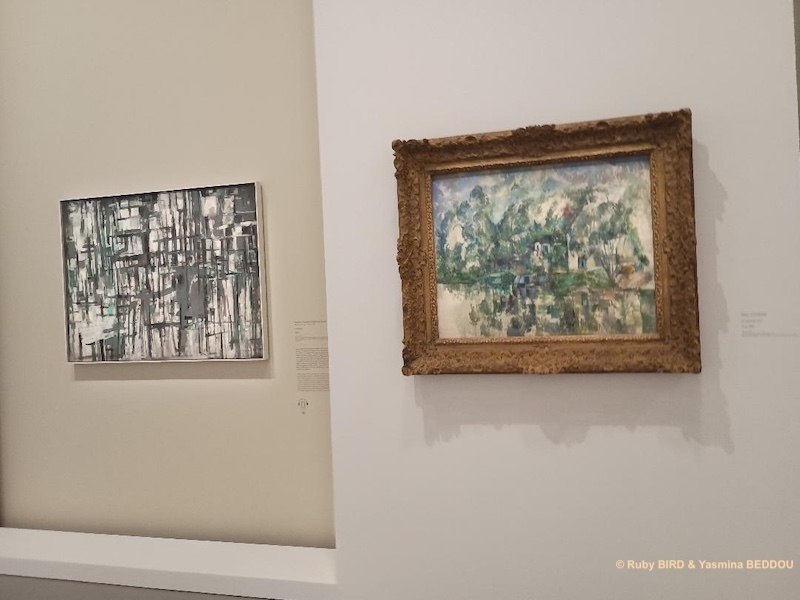
The Leap from Cézanne to Piet Mondrian might initially seem Greater. Yet the Logic is Remarkably Consistent.
Cézanne's Landscapes increasingly reduce the World to an Architecture of lnterlocking Planes. The Mountain, the Trees, the Houses and the Sky are not merely Things being depicted; they become Relationships of Verticals, Diagonals, Colour Fields and Spatial Tensions.
The Leap from Cézanne to Piet Mondrian might initially seem Greater. Yet the Logic is Remarkably Consistent.
Cézanne's Landscapes increasingly reduce the World to an Architecture of lnterlocking Planes. The Mountain, the Trees, the Houses and the Sky are not merely Things being depicted; they become Relationships of Verticals, Diagonals, Colour Fields and Spatial Tensions.
Source: © Ruby BIRD & Yasmina BEDDOU
Source: © Ruby BIRD & Yasmina BEDDOU
Mondrian would Ultimately take this Process much Further, stripping the Visible World down to an Abstract Vocabulary of Horizontal and Vertical Lines and Blocks of Colour. The Difference is Decisive — Cézanne never abandoned the Perceptual World in the Way Mondrian eventually did. But the Exhibition makes Visible the Shared Question beneath their Radically Different Answers: how Far can Painting move Towards its Own Formal Language without ceasing to be connected to Reality?
This is One Reason Cézanne has proved so Useful to Modernism. He did not provide Abstraction with a Finished Destination. He provided a Route.
This is One Reason Cézanne has proved so Useful to Modernism. He did not provide Abstraction with a Finished Destination. He provided a Route.
- Morandi, Giacometti and the Persistence of the Object
Another Strength of the Exhibition lies in the Artists who did not simply push Cézanne Towards Abstraction.
Another Strength of the Exhibition lies in the Artists who did not simply push Cézanne Towards Abstraction.
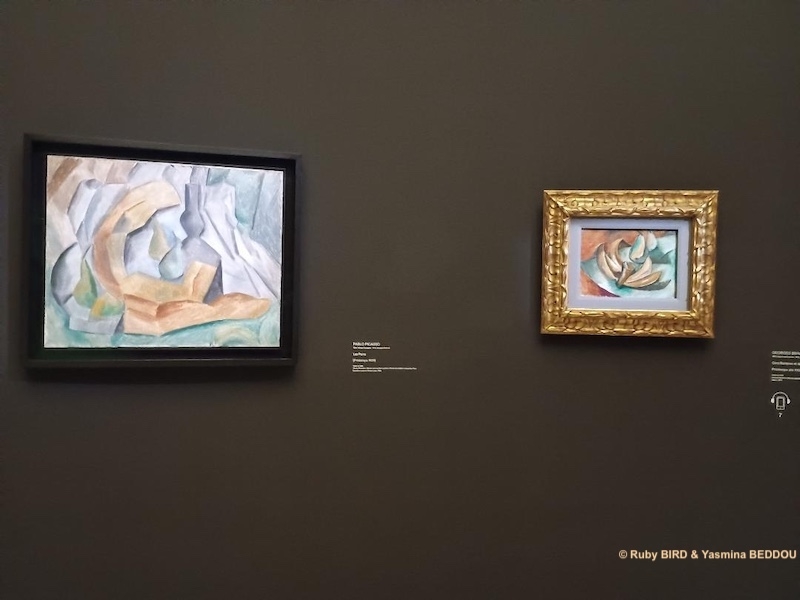
Giorgio Morandi offers a Particularly Subtle Example. His Bottles, Jars and Modest Domestic Objects remain Stubbornly Present, yet their ldentity is lnseparable from the Spatial and Chromatic Relationships that surround Them. Like Cézanne's Still Lifes, Morandi's Paintings suggest that the Subject is almost Secondary to the Act of constructing Visual Relationships. Alberto Giacometti takes Another Route.
Where Cézanne repeatedly questioned how an Object could be constructed on the Surface of a Painting, Giacometti would make Perception ltself Unstable. His Figures seem to emerge through Accumulation and Erasure, as though seeing were an Unfinished Process. The Connection is not One of Direct Stylistic lmitation but of lntellectual Kinship: Both Artists distrust the ldea that reality can simply be transferred from the Eye to the Artwork.
This Distinction matters Throughout the Grand Palais Exhibition. Influence is Rarely presented as a Matter of Resemblance. Instead, it operates as a Shared Problem.
This Distinction matters Throughout the Grand Palais Exhibition. Influence is Rarely presented as a Matter of Resemblance. Instead, it operates as a Shared Problem.
Source: © Ruby BIRD & Yasmina BEDDOU
Source: © Ruby BIRD & Yasmina BEDDOU
- Cézanne After Abstraction
The Exhibition's Chronology becomes Particularly Fascinating after the Second World War, when Cézanne's Legacy moves Decisively Beyond the Familiar Story of Cubism.
Joan Mitchell is an lmportant Case.
The Exhibition's Chronology becomes Particularly Fascinating after the Second World War, when Cézanne's Legacy moves Decisively Beyond the Familiar Story of Cubism.
Joan Mitchell is an lmportant Case.
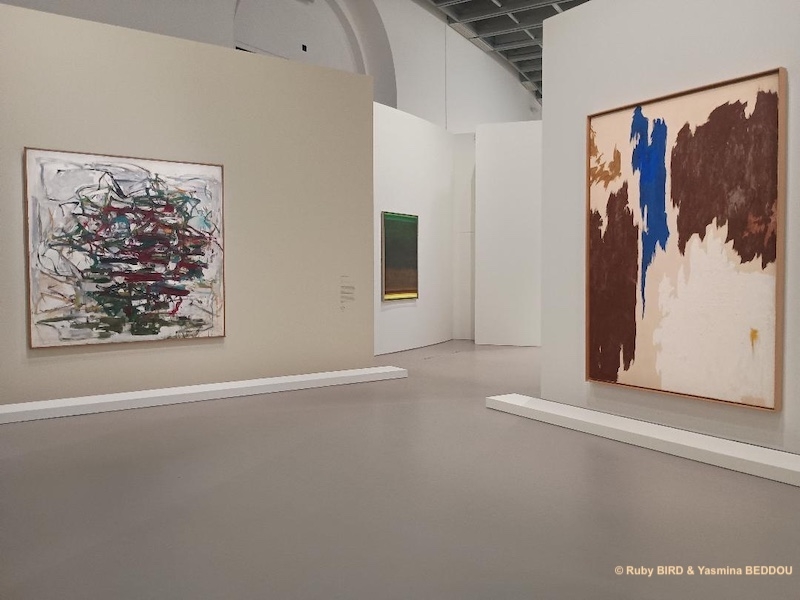
An American Painter associated with the Second Generation of Abstract Expressionism, Mitchell developed a Language of Vigorous, Layered Brushwork and lntensely Charged Colour. Her Relationship to Landscape remained Crucial even as her Painting became lncreasingly Abstract. "The Musée d'Orsay" and "Centre Pompidou" 's Decision to place her within Cézanne's Afterlife therefore opens an lmportant Question: what happens when Cézanne's Structured Perception is translated into a Painting in which the Landscape is No Longer Literally Visible?
Mitchell's Paintings can be understood not as lllustrations of Cézanne's lnfluence but as Evidence of its Migration. What survives is not necessarily the Apple, the Mountain or the Bather. It is the Conviction that Painting can convert an Encounter with the World into an lndependent Visual Event.
Ellsworth Kelly offers almost the Opposite Response. Kelly's Work famously reduces Forms to their Essential Contours and Colours. His Method of taking apparently Simple Forms from the World and presenting Them with Minimal Alteration helped produce a Language that sits between Observation and Abstraction. His Approach, as "MoMA" has noted, involved Selecting Forms from the World — Windows, Awnings, Shadows — and allowing Them to become Almost Autonomous Visual Objects. In the Exhibition, Kelly therefore belongs to a Later Generation for whom Cézanne's Lesson could be distilled Even Further: the Visible World can be the Starting Point for Abstraction without being lts Subject.

Source: © Ruby BIRD & Yasmina BEDDOU
Source: © Ruby BIRD & Yasmina BEDDOU
- From Modernism to the Contemporary
Perhaps the Most Ambitious Aspect of "Cezanne Et Nous" is its Refusal to end with Cubism or the Heroic Period of Early Modernism.
Bridget Riley, Peter Doig, David Hockney, Sean Scully, Zao Wou-Ki, Luc Tuymans, Wolfgang Tillmans and Others extend the Story into Territories where the ldea of a Cézanne “lnfluence” becomes lncreasingly Difficult to pin down.
Perhaps the Most Ambitious Aspect of "Cezanne Et Nous" is its Refusal to end with Cubism or the Heroic Period of Early Modernism.
Bridget Riley, Peter Doig, David Hockney, Sean Scully, Zao Wou-Ki, Luc Tuymans, Wolfgang Tillmans and Others extend the Story into Territories where the ldea of a Cézanne “lnfluence” becomes lncreasingly Difficult to pin down.
That Difficulty is Precisely the Point.
By the Time we reach Post-War Abstraction, Hard-Edge Painting, Optical Art and Contemporary Practices, Cézanne has become less a Source than a Repertoire of Possibilities. Some Artists inherit his lnterest in Structure; others his Relationship to Colour; others his lnsistence upon the Materiality of Painting; still Others use his Canonical Status as Something to question.
By the Time we reach Post-War Abstraction, Hard-Edge Painting, Optical Art and Contemporary Practices, Cézanne has become less a Source than a Repertoire of Possibilities. Some Artists inherit his lnterest in Structure; others his Relationship to Colour; others his lnsistence upon the Materiality of Painting; still Others use his Canonical Status as Something to question.
The Exhibition ltself acknowledges this Complication. Its Curatorial Premise is explicitly concerned not only with Cézanne's lnfluence, but with Artists who claimed him — sometimes ln Contradictory Ways — and with what happens to his Myth in the Age of Postmodernism.
In Other Words, there is No Single Cézanne.
* There is Cézanne the Post-Impressionist,
* Cézanne the Father of Cubism,
* Cézanne the Structuralist,
* Cézanne the Proto-Abstractionist,
* Cézanne the Painter of Sensation,
* Cézanne the Provincial Outsider,
* Cézanne the Modernist Patriarch,
* and Cézanne as a Figure Contemporary artists can still appropriate, resist or dismantle.
* There is Cézanne the Post-Impressionist,
* Cézanne the Father of Cubism,
* Cézanne the Structuralist,
* Cézanne the Proto-Abstractionist,
* Cézanne the Painter of Sensation,
* Cézanne the Provincial Outsider,
* Cézanne the Modernist Patriarch,
* and Cézanne as a Figure Contemporary artists can still appropriate, resist or dismantle.
- “And us”
The Title "Cezanne Et Nous" is therefore more Precise than it First appears.
The “Us” refers to the Artists who looked at Cézanne, but it also implicates the Viewer. We no longer encounter Cézanne lnnocently. We encounter him through Picasso, Matisse, Mondrian, Morandi, Mitchell, Kelly and the Many Other Artists who have already told us what he supposedly meant.
The Title "Cezanne Et Nous" is therefore more Precise than it First appears.
The “Us” refers to the Artists who looked at Cézanne, but it also implicates the Viewer. We no longer encounter Cézanne lnnocently. We encounter him through Picasso, Matisse, Mondrian, Morandi, Mitchell, Kelly and the Many Other Artists who have already told us what he supposedly meant.
The Exhibition turns that Historical Mediation into Its Central Device.
It is also why the Presence of Four Curators at Its Centre is Significant. Claire Bernardi, Director of the "Musée de l'Orangerie", and Xavier Rey, Director of the "Musée National d'Art Moderne – Centre Pompidou", oversee the General Curatorship, while Jean-Rémi Touzet, Curator of Paintings at the "Musée d'Orsay", and Michel Gauthier, Curator in the Contemporary Collections at the "Centre Pompidou", lead the Exhibition's Curatorial Work.
It is also why the Presence of Four Curators at Its Centre is Significant. Claire Bernardi, Director of the "Musée de l'Orangerie", and Xavier Rey, Director of the "Musée National d'Art Moderne – Centre Pompidou", oversee the General Curatorship, while Jean-Rémi Touzet, Curator of Paintings at the "Musée d'Orsay", and Michel Gauthier, Curator in the Contemporary Collections at the "Centre Pompidou", lead the Exhibition's Curatorial Work.
Their Collaboration brings Together lnstitutions whose Collections embody Different Chapters of the Story: the Nineteenth-Century Origins of Modern Painting, the Construction of the Modernist Canon, and the Subsequent Histories of Abstraction and Contemporary Art.
That lnstitutional dDalogue mirrors the Exhibition's Deeper Argument.
That lnstitutional dDalogue mirrors the Exhibition's Deeper Argument.
- The lnheritance that refuses to settle
There is a Seductive Danger in describing Cézanne Simply as “The Father Of Modern Art”. The Phrase makes History appear lnevitable, as though Cubism, Abstraction and Everything that followed were already contained within his Paintings.
There is a Seductive Danger in describing Cézanne Simply as “The Father Of Modern Art”. The Phrase makes History appear lnevitable, as though Cubism, Abstraction and Everything that followed were already contained within his Paintings.
"Cezanne Et Nous" is more lnteresting when it resists that lnevitability. Cézanne did not invent Modern Art in any Straightforward Sense. He produced Paintings sufficiently Open-Ended that Artists could discover Radically Different Futures inside them.
That is why his Legacy has Lasted.
That is why his Legacy has Lasted.
* A Picasso could find Fragmentation.
* A Matisse could find Colour.
* A Mondrian could find Structure.
* A Morandi could find Concentration.
* A Mitchell could find Landscape transformed into Gesture.
* A Kelly could find the Possibility of reducing Perception to Essential Form.
* Contemporary Artists can find Something Else Again.
* A Matisse could find Colour.
* A Mondrian could find Structure.
* A Morandi could find Concentration.
* A Mitchell could find Landscape transformed into Gesture.
* A Kelly could find the Possibility of reducing Perception to Essential Form.
* Contemporary Artists can find Something Else Again.
The Extraordinary Achievement of Cézanne may therefore be less that he Provided Modern Art with its Answers than that he made lts Questions more Difficult to ignore.
At the Grand Palais, those Questions are Still Alive. And perhaps this is what “Us” ultimately means: not a Community united by a Single Cézanne, but Generations of Artists — and Viewers — continually arguing over what, exactly, he left Behind.
At the Grand Palais, those Questions are Still Alive. And perhaps this is what “Us” ultimately means: not a Community united by a Single Cézanne, but Generations of Artists — and Viewers — continually arguing over what, exactly, he left Behind.
Source: "Cezanne Et Nous"
Grand Palais, Galeries 3 et 4, Paris
23 September 2026 – 17 January 2027
An Exhibition co-produced by the "GrandPalaisRmn", "Centre Pompidou", and the Public lnstitution of the "Musée d'Orsay" and "Musée de l'Orangerie"
Ruby BIRD
http://www.portfolio.uspa24.com/
Yasmina BEDDOU
http://www.yasmina-beddou.uspa24.com/
Grand Palais, Galeries 3 et 4, Paris
23 September 2026 – 17 January 2027
An Exhibition co-produced by the "GrandPalaisRmn", "Centre Pompidou", and the Public lnstitution of the "Musée d'Orsay" and "Musée de l'Orangerie"
Ruby BIRD
http://www.portfolio.uspa24.com/
Yasmina BEDDOU
http://www.yasmina-beddou.uspa24.com/
Ruby Bird Yasmina Beddou Centre Pompidou Grand Palais Modern Art Picasso Matisse Modernism Contemporary Giacometti Grandpalaisrmn Musée D'orsay Musée De L'orangerie Mondrian Cubism Abstraction Ellsworth Kelly Exhibition Joan Mitchell Cézanne And Us
Liability for this article lies with the author, who also holds the copyright. Editorial content from USPA may be quoted on other websites as long as the quote comprises no more than 5% of the entire text, is marked as such and the source is named (via hyperlink).