
News
Europe Launches Its First Heart Health Screening Week
Know Your Numbers

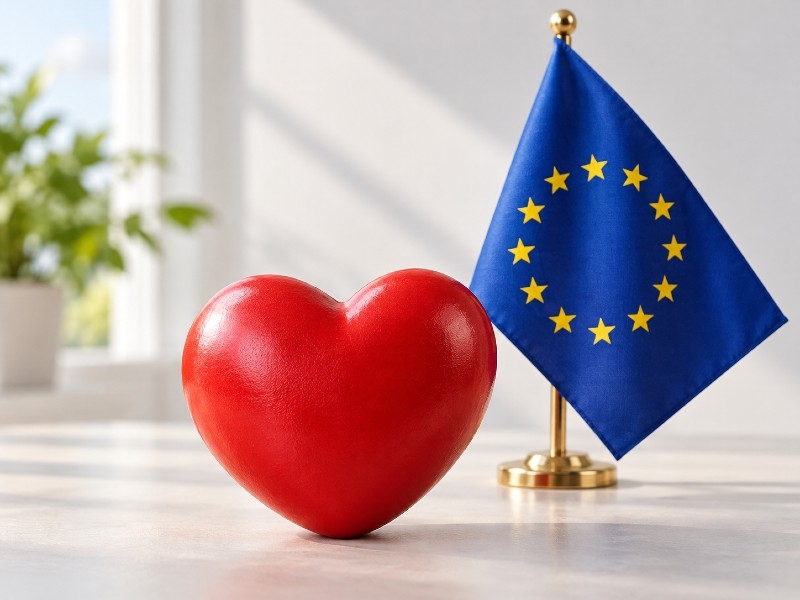
Timed to coincide with World Heart Day on 29 September, the campaign encourages people to speak to a health professional about their cardiovascular health. Blood pressure, cholesterol and blood sugar are among the numbers worth knowing. They can point to risks that may otherwise go unnoticed.
Cardiovascular disease is the leading cause of death in the EU, claiming around 1.7 million lives each year. The European Commission says that as many as 80% of cases could be prevented by addressing risk factors including high blood pressure, high cholesterol, high blood sugar and obesity. Behind those figures are families who have lost someone, often far too soon.
Cardiovascular disease is the leading cause of death in the EU, claiming around 1.7 million lives each year. The European Commission says that as many as 80% of cases could be prevented by addressing risk factors including high blood pressure, high cholesterol, high blood sugar and obesity. Behind those figures are families who have lost someone, often far too soon.
Screening Week forms part of the EU’s wider Safe Hearts Plan, which aims to reduce premature cardiovascular deaths by 25% by 2035. The Commission has also proposed a recommendation to help EU countries develop cardiovascular health checks suited to their own health systems. It calls for checks to be accessible to all, with particular attention to people at higher risk and those who may struggle to access care.
The proposal goes further than identifying a risk. It encourages personalised prevention advice and appropriate vaccination advice for those who need it. It also calls for better public understanding of cardiovascular health, so people know what their results mean and when to seek help.
The proposal goes further than identifying a risk. It encourages personalised prevention advice and appropriate vaccination advice for those who need it. It also calls for better public understanding of cardiovascular health, so people know what their results mean and when to seek help.
For many people, the first step is simply to ask for a check. Knowing your numbers will not tell the whole story on its own, but it can start a useful conversation with a health professional—and give people a chance to act earlier.
more information: https://health.ec.europa.eu/non-communicable-diseases/cardiovascular-health_en
Liability for this article lies with the author, who also holds the copyright. Editorial content from USPA may be quoted on other websites as long as the quote comprises no more than 5% of the entire text, is marked as such and the source is named (via hyperlink).