
Politics
THE LYHANNA AFFAIR FROM A MISSING 11 YEARS OLD TO A POLITICAL CRISIS IN PARIS
“THE STATE HAS FAILED" G. DARMANIN SAYS
Lyhanna the 11 years old girl victim (Source: Wikipedia)
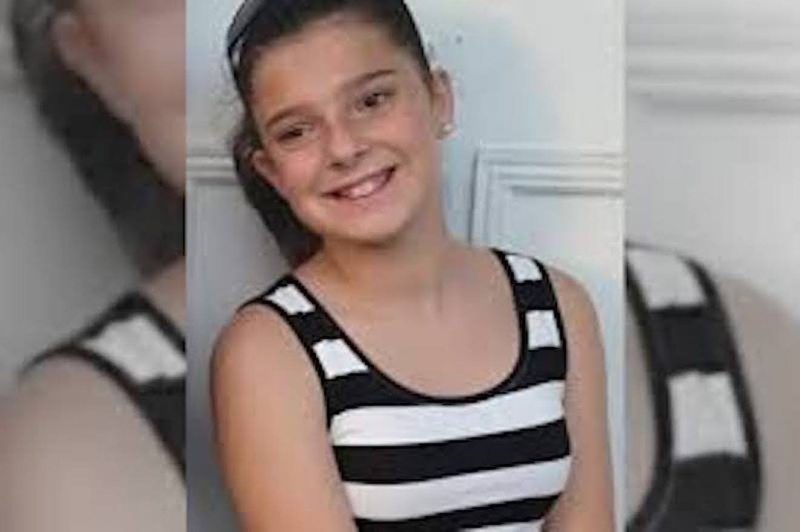
Lyhanna the 11 years old girl
(Source: Wikimedia)
(Source: Wikimedia)
The French public is in shock and anger after the body of 11 years old Lyhanna, missing for six days from the small town of Fleurance in the Gers, was found on Thursday. According to the prosecutor of Agen, the body, “appearing to be that of a child and wearing clothing similar to those of the minor abducted and held,” was discovered in an agricultural silo on a farm site in Puycasquier, around fifteen kilometres from the place where the girl was last seen. The location belongs to an agricultural company where the main suspect, Jerome Barella, a 41 years old father and former employee, worked in the 2010s. An autopsy has been ordered to formally confirm the identity and determine the causes of death, but for Lyhanna’s family and for a country that followed the search hour by hour, the fear has already turned into horror.
THE SEARCH: SIX DAYS OF HOPE BEFORE THE DISCOVERY
For nearly a week, up to 170–200 gendarmes, hunters, volunteers and riders from a local equestrian centre combed fields, woods and waterways around Fleurance, hoping to find the girl alive. Lyhanna had been seen one last time leaving her middle school on 29 May; a witness later confirmed that she got into the car of Jérôme B., the father of one of her friends, who claimed he drove her to the local swimming pool; a pool that was, in fact, closed that day. Investigators quickly focused on the three?hour gap between the alleged drop?off and the moment the suspect was seen at his younger daughter’s school fête in a neighbouring village, Montestruc?sur?Gers, shortly before 19:00.
For nearly a week, up to 170–200 gendarmes, hunters, volunteers and riders from a local equestrian centre combed fields, woods and waterways around Fleurance, hoping to find the girl alive. Lyhanna had been seen one last time leaving her middle school on 29 May; a witness later confirmed that she got into the car of Jérôme B., the father of one of her friends, who claimed he drove her to the local swimming pool; a pool that was, in fact, closed that day. Investigators quickly focused on the three?hour gap between the alleged drop?off and the moment the suspect was seen at his younger daughter’s school fête in a neighbouring village, Montestruc?sur?Gers, shortly before 19:00.
The suspect’s vehicle, an older model, yielded no forensic traces of a crime, only the expected DNA of Lyhanna, but gendarmes began exploiting its onboard GPS and other data to retrace its movements on the day of the disappearance. While that digital work continued, search teams extended their perimeter eastwards, eventually leading to the Puycasquier farm where the body was found concealed in a silo, hidden from view on the edge of the site.
A SUSPECT WITH PRIOR ALLEGATIONS AND CASES CLOSED WITHOUT ACTION
The judicial and political shock surrounding the case is amplified by the suspect’s background. Jerome Barella, father of Lyhanna’s best friend at school now indicted for kidnapping and placed in pre?trial detention, was already the subject of several complaints for sexual violence against minors, dating back to 2017, 2020 and especially to a rape complaint filed in August 2025 concerning a girl under 15. That complaint, lodged near Toulouse, was transferred to the competent prosecutor’s office in Auch in late 2025; according to press reports and the man’s own lawyer, he has still never been formally questioned in that procedure.
The judicial and political shock surrounding the case is amplified by the suspect’s background. Jerome Barella, father of Lyhanna’s best friend at school now indicted for kidnapping and placed in pre?trial detention, was already the subject of several complaints for sexual violence against minors, dating back to 2017, 2020 and especially to a rape complaint filed in August 2025 concerning a girl under 15. That complaint, lodged near Toulouse, was transferred to the competent prosecutor’s office in Auch in late 2025; according to press reports and the man’s own lawyer, he has still never been formally questioned in that procedure.
In recent days, another father has come forward to accuse Barella of raping his 11?year?old daughter during a sleepover at the suspect’s home in Montestruc in August 2025, adding to a pattern that many parents had tried to denounce. Two earlier complaints were reportedly closed without further action, while the most recent remains at the preliminary investigation stage. For Lyhanna’s family and for many citizens, this accumulation of warnings that did not lead to protective measures has turned a criminal investigation into an indictment of the justice system itself.
THE DRAMA OCCURRED DESPITE FAMILIES’ WARNINGS LED A COMMUNITY IN A STRONG ANGER
Locally, several parents say they had alerted authorities or at least raised concerns long before the tragedy. According to the mother of one of Lyhanna’s friends, the suspect had an intense, intrusive presence around the girls: bringing cakes and sweets after school, buying pizzas for pyjama parties, giving “tickles” and physical attention that made some children uncomfortable. Those details, which might once have been dismissed as clumsy affection, now take on a chilling light.
Locally, several parents say they had alerted authorities or at least raised concerns long before the tragedy. According to the mother of one of Lyhanna’s friends, the suspect had an intense, intrusive presence around the girls: bringing cakes and sweets after school, buying pizzas for pyjama parties, giving “tickles” and physical attention that made some children uncomfortable. Those details, which might once have been dismissed as clumsy affection, now take on a chilling light.
Even certain journalists, usually careful to maintain neutrality, have publicly questioned how such signals could be ignored. The spokesperson for a the Ministry of Justice, Sacha Straub?Kahn, summed up a widely shared sentiment: no conventional explanation can account for “the chain of so many alerts” that did not translate into protective action. In her words, “it is a system that has failed a collective failure where neither judges, nor police, nor the education system managed to rise up in time to protect a child”.
A POLITICAL EARTHQUAKE FOR JUSTICE AND THE GOVERNMENT
Very quickly, the Lyhanna case moved from the crime pages to the political arena. Prime Minister Sébastien Lecornu cancelled a trip and convened an emergency meeting with his interior and justice ministers, signalling that the affair had become a matter of state. Opposition leaders seized on the anger: “The State has failed gravely, the people demand accountability,” declared Jordan Bardella, president of the Rassemblement National, framing the tragedy as proof of what he calls the “bankruptcy” of the justice system.
Very quickly, the Lyhanna case moved from the crime pages to the political arena. Prime Minister Sébastien Lecornu cancelled a trip and convened an emergency meeting with his interior and justice ministers, signalling that the affair had become a matter of state. Opposition leaders seized on the anger: “The State has failed gravely, the people demand accountability,” declared Jordan Bardella, president of the Rassemblement National, framing the tragedy as proof of what he calls the “bankruptcy” of the justice system.
For the government, the risk is two?fold: a loss of confidence in institutions tasked with protecting children, and the transformation of a judicial drama into a weapon in the already?underway presidential pre?campaign. In the National Assembly, MPs from across the spectrum have called for explanations about how complaints against the suspect were handled, and why, on a corps of roughly 9,000 magistrates, only a handful are ever disciplined for misjudgements or failures in cases with life?and?death consequences.
MINISTER OF JUSTICE GERALD DARMANIN ADMITS A “DYSFUNCTION” AND PROMISES AN ADMINISTRATIVE INQUIRY
Justice Minister Gerald Darmanin, who has been under intense pressure since the first revelations about prior complaints, has taken the unusual step of publicly acknowledging a “terrifying dysfunction”. On the eve of his crisis meeting at Matignon with the Prime Minister and Interior Minister Laurent Nunez, he told reporters he would “assume [his] responsibility and the collective responsibility” of the institution, calling the situation “unacceptable”. Darmanin has announced an administrative inquiry into the handling of the various procedures involving Jerome Barella and pledged to make its conclusions public.
Justice Minister Gerald Darmanin, who has been under intense pressure since the first revelations about prior complaints, has taken the unusual step of publicly acknowledging a “terrifying dysfunction”. On the eve of his crisis meeting at Matignon with the Prime Minister and Interior Minister Laurent Nunez, he told reporters he would “assume [his] responsibility and the collective responsibility” of the institution, calling the situation “unacceptable”. Darmanin has announced an administrative inquiry into the handling of the various procedures involving Jerome Barella and pledged to make its conclusions public.
At the same time, former magistrates such as Francis Nachbar point to a deeper structural issue: a justice system that, in their view, “never truly questions itself” and where decisions to dismiss cases rarely lead to sanctions or reforms. For child?protection advocates, the Lyhanna affair risks becoming a tragic emblem of this culture of impunity for institutional mistakes, unless the promised scrutiny leads to real changes in how complaints involving minors are prioritised and processed.
THE LAWYER’S VOICE AND A FAMILY LEFT WITH “TERROR AND ANGER”
The lawyer for Lyhanna’s parents has spoken of learning the news “in horror”, describing a family crushed under a grief and anger “almost impossible to put into words” while they wait for the autopsy and the formal identification. For them, the central question goes beyond the individual guilt of the suspect, who remains legally presumed innocent at this stage: they want to know why successive warnings did not trigger protective measures that might have saved their daughter.
In the coming days, the autopsy report, the analysis of the car’s GPS data and the examination of the suspect’s digital devices will all feed into the criminal file. But in the court of public opinion, another trial has already begun that of a justice and police system accused of being too slow, under?resourced and, as one police union put it, “stuck in archaic procedures”, still relying on paper and postal mail in an age of instant digital alerts.
The lawyer for Lyhanna’s parents has spoken of learning the news “in horror”, describing a family crushed under a grief and anger “almost impossible to put into words” while they wait for the autopsy and the formal identification. For them, the central question goes beyond the individual guilt of the suspect, who remains legally presumed innocent at this stage: they want to know why successive warnings did not trigger protective measures that might have saved their daughter.
In the coming days, the autopsy report, the analysis of the car’s GPS data and the examination of the suspect’s digital devices will all feed into the criminal file. But in the court of public opinion, another trial has already begun that of a justice and police system accused of being too slow, under?resourced and, as one police union put it, “stuck in archaic procedures”, still relying on paper and postal mail in an age of instant digital alerts.
A LOCAL TRAGEDY, A NATIONAL TEST AS PRESIDENTIAL RE CAMPAIGN KICKED OFF
What began as the disappearance of a schoolgirl in a town of 6,000 inhabitants has become a mirror held up to France: its capacity to listen to children, to act on early warnings, and to hold its own institutions to account. In Fleurance and Puycasquier, the priority remains to support a devastated family and a traumatised community. In Paris, the Lyhanna affair is already forcing leaders, magistrates and police to confront an uncomfortable question: how many signals must be ignored, and how many children must be lost, before “dysfunction” is no longer an alibi but the starting point for a profound reform of the French judicial system meant to protect them, as the A.I is pointing the lacks and could be helpful versus the scarcity of judges facing too many cases ?
What began as the disappearance of a schoolgirl in a town of 6,000 inhabitants has become a mirror held up to France: its capacity to listen to children, to act on early warnings, and to hold its own institutions to account. In Fleurance and Puycasquier, the priority remains to support a devastated family and a traumatised community. In Paris, the Lyhanna affair is already forcing leaders, magistrates and police to confront an uncomfortable question: how many signals must be ignored, and how many children must be lost, before “dysfunction” is no longer an alibi but the starting point for a profound reform of the French judicial system meant to protect them, as the A.I is pointing the lacks and could be helpful versus the scarcity of judges facing too many cases ?
The Lyhanna case already looked like the failure of a chain of individuals. It is now exposing something deeper: a justice system that is structurally overloaded, technologically behind and almost physically incapable of absorbing the volume of cases it produces.
Liability for this article lies with the author, who also holds the copyright. Editorial content from USPA may be quoted on other websites as long as the quote comprises no more than 5% of the entire text, is marked as such and the source is named (via hyperlink).