
Technology
ALSTOM LANDS BELGRADE METRO LINE 1 FRENCH RAIL CHAMPION EXPORTS EXPERTISE
€915 MILLION DRIVERLESS LINE BOOSTS
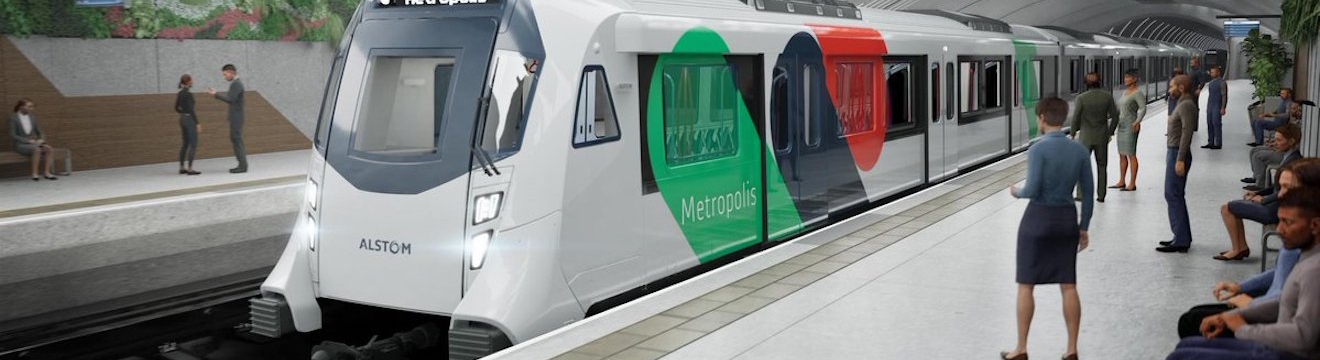
Alstom-Metro (Source: Facebook)
USPA NEWS -
Alstom, one of France’s flagship industrial groups in rail and urban mobility, has taken a major step in its international expansion with the award of a €915 million turnkey contract for Belgrade’s first metro line. The group is today the world’s number two rail manufacturer behind China’s CRRC, after absorbing Canadian rival Bombardier Transportation in 2021, and stands ahead of Germany’s Siemens in rolling stock volumes. With €18.5 billion in revenue in the 2024–2025 fiscal year and 86,000 employees in 63 countries, Alstom has become a central lever of French economic diplomacy, using metros and trains as tools of long term influence from Europe to the Middle East and the Americas. The Belgrade deal, which covers Metro Line 1 in the Serbian capital, confirms the strategic role of French rail technology in equipping fast growing cities worldwide with automated metro systems, at a time when competition from Asian manufacturers is intensifying.
In a world shaken by open conflict between Iran, Israel and the United States since late February 2026, industrial planning can no longer be separated from geopolitical risk. At a time when supply chains, energy routes and public finances are under pressure, Alstom’s Belgrade breakthrough illustrates how a French rail champion can still secure long term contracts in strategically located countries, anchoring heavy industry know how and transit infrastructure well beyond France’s borders. Far from offering definitive answers, this editorial simply argues that anticipating these shifts, and understanding the role of groups like Alstom in them, is now essential for anyone trying to read what lies behind the headline numbers of defense and energy crises.
A STRUCTURAL SHIFT FOR BELGRADE’S URBAN MOBILITY
In its first phase, Belgrade’s Metro Line 1 will link Makisko Polje to Karaburma over 15 kilometres and 15 stations, including 11 kilometres of tunnels driven beneath the city centre. By moving a significant share of public transport underground, the project aims to relieve chronic road congestion, shorten commuting times and make the Serbian capital more attractive for residents, investors and tourists alike. For a metropolitan area of almost two million people, the arrival of a fully automated metro marks a structural break with decades of reliance on buses, trams and private cars.
In its first phase, Belgrade’s Metro Line 1 will link Makisko Polje to Karaburma over 15 kilometres and 15 stations, including 11 kilometres of tunnels driven beneath the city centre. By moving a significant share of public transport underground, the project aims to relieve chronic road congestion, shorten commuting times and make the Serbian capital more attractive for residents, investors and tourists alike. For a metropolitan area of almost two million people, the arrival of a fully automated metro marks a structural break with decades of reliance on buses, trams and private cars.
TURNKEY CONTRACT AND FRENCH INDUSTRIAL FOOTPRINT
Alstom will act as system integrator for the public operator Belgrade Metro & Train, delivering a fully integrated turnkey package. This includes 32 Metropolis driverless three car trains, signaling and telecoms, power supply, trackwork, platform screen doors, depot equipment, a centralised control centre and a comprehensive cybersecurity architecture. The system will be operated using Alstom’s Urbalis CBTC technology, allowing high frequency, fully automated operation with headways down to around 90 seconds at peak times. The Metropolis trains themselves will be manufactured at Alstom’s Valenciennes site in northern France, ensuring industrial spin offs and workload for the French rail ecosystem.
Alstom will act as system integrator for the public operator Belgrade Metro & Train, delivering a fully integrated turnkey package. This includes 32 Metropolis driverless three car trains, signaling and telecoms, power supply, trackwork, platform screen doors, depot equipment, a centralised control centre and a comprehensive cybersecurity architecture. The system will be operated using Alstom’s Urbalis CBTC technology, allowing high frequency, fully automated operation with headways down to around 90 seconds at peak times. The Metropolis trains themselves will be manufactured at Alstom’s Valenciennes site in northern France, ensuring industrial spin offs and workload for the French rail ecosystem.
FRENCH FINANCING AND A STRATEGIC PARTNERSHIP WITH SERBIA
The project benefits from financial support by the French state, which has become a key lever in securing major export contracts in the rail sector. By backing Belgrade’s first metro, Paris positions itself as a long term infrastructure partner for Serbia at a time when the Balkans are a field of intense competition between European, Chinese and other actors. For Serbia, choosing a French turnkey solution signals a desire to anchor part of its transport modernisation within European industrial standards, while diversifying its partnerships.
The project benefits from financial support by the French state, which has become a key lever in securing major export contracts in the rail sector. By backing Belgrade’s first metro, Paris positions itself as a long term infrastructure partner for Serbia at a time when the Balkans are a field of intense competition between European, Chinese and other actors. For Serbia, choosing a French turnkey solution signals a desire to anchor part of its transport modernisation within European industrial standards, while diversifying its partnerships.
AUTOMATION, CAPACITY AND CLIMATE BENEFITS
The introduction of driverless metro technology is expected to deliver concrete benefits for passengers and operators. Higher frequencies and shorter headways will increase capacity on the line, while automatic operation and platform screen doors should improve safety and service regularity. Coupled with energy efficient traction systems and regenerative braking, the metro will help cut emissions from urban transport and support Serbia’s climate and air quality goals. By offering a reliable alternative to the private car, it also supports a more compact, transit oriented model of urban development.
The introduction of driverless metro technology is expected to deliver concrete benefits for passengers and operators. Higher frequencies and shorter headways will increase capacity on the line, while automatic operation and platform screen doors should improve safety and service regularity. Coupled with energy efficient traction systems and regenerative braking, the metro will help cut emissions from urban transport and support Serbia’s climate and air quality goals. By offering a reliable alternative to the private car, it also supports a more compact, transit oriented model of urban development.
ABOUT ALSTOM: A GLOBAL RAIL POWERHOUSE
Alstom is a pure play rail group, active across high speed and regional trains, metros, trams, signaling, services and turnkey systems. After the sale of its energy businesses to General Electric and the acquisition of Bombardier Transportation, the company has refocused on rail as the backbone of sustainable mobility. Its shareholder base reflects both French and international backing, with long term investors such as Quebec’s Caisse de dépôt et placement, Bpifrance and major global asset managers. For France, this industrial footprint makes Alstom a strategic asset in export policy, financing tools and discussions on European industrial sovereignty.
Alstom is a pure play rail group, active across high speed and regional trains, metros, trams, signaling, services and turnkey systems. After the sale of its energy businesses to General Electric and the acquisition of Bombardier Transportation, the company has refocused on rail as the backbone of sustainable mobility. Its shareholder base reflects both French and international backing, with long term investors such as Quebec’s Caisse de dépôt et placement, Bpifrance and major global asset managers. For France, this industrial footprint makes Alstom a strategic asset in export policy, financing tools and discussions on European industrial sovereignty.
With a war now raging for over three weeks between Iran, Israel and the United States (kicked off on 28th February 2026), the global economy has tilted further towards a de facto war time footing, where energy routes, shipping lanes and public finances are constantly repriced by markets. The armed conflict enters its fourth week and adds a new layer of uncertainty to an already fragile global order, contracts that might once have seemed purely technical now carry unmistakable strategic meaning.
In this environment, re orienting industrial strategies and long term contracts is not a technical afterthought but a strategic necessity, and Alstom an undisputed leader in heavy transport equipment and urban transit offers a clear example of how France can still project economic weight and secure key infrastructure in Europe. Alstom’s metro deal in Belgrade shows how a French industrial flagship can help lock in critical transport infrastructure at a moment when investors and states alike are rethinking exposure to high risk regions and suppliers.
This article does not pretend to close the debate; it aims to offer one informed perspective on how industrial policy, export diplomacy and hard security are converging, and why following Alstom’s trajectory has become a way of taking the pulse of France’s broader power projection
Our inclusive newsroom, which integrates journalists with disabilities into its economic and industrial coverage, does not pretend to settle the debate on France’s industrial future; it aims to provide one informed, intellectually honest reading, grounded in official documents and financial data, of how a single metro contract can signal deeper shifts in the balance between industry, war economy dynamics and geopolitical influence.
Our inclusive newsroom, which integrates journalists with disabilities into its economic and industrial coverage, does not pretend to settle the debate on France’s industrial future; it aims to provide one informed, intellectually honest reading, grounded in official documents and financial data, of how a single metro contract can signal deeper shifts in the balance between industry, war economy dynamics and geopolitical influence.
Liability for this article lies with the author, who also holds the copyright. Editorial content from USPA may be quoted on other websites as long as the quote comprises no more than 5% of the entire text, is marked as such and the source is named (via hyperlink).