
Politics
FRENCH PM S.LECORNU SURVIVES SIX CENSURE VOTES AND SECURES FRANCE’S 2026 BUDGET
SAVES HIS PREMIERSHIP & BUDGET
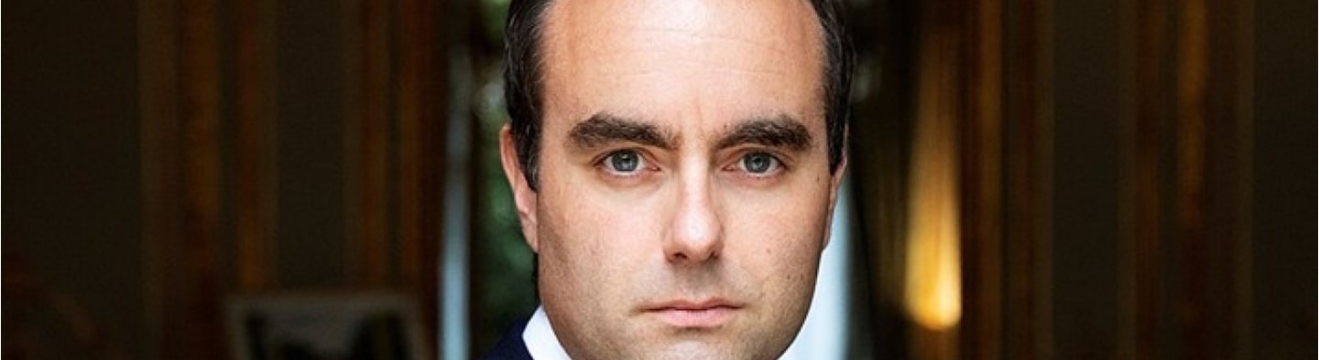
French Prime Minister Sebastien Lecornu (Source: French government)
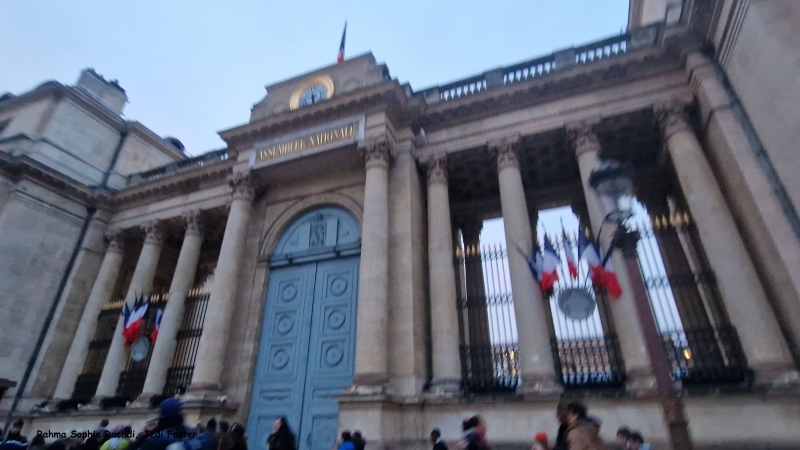
Facade of National Assembly
(Source: Rahma Sophia rachdi Jedi Foster)
(Source: Rahma Sophia rachdi Jedi Foster)
After four months of debates, three uses of article 49.3 and six no confidence attempts, French Prime Minister Sebastien Lecornu has finally secured a 2026 state budget. On Monday 2 February, the National Assembly rejected the last two censure motions: the one tabled by La France Insoumise, (Far Left LFI) the Communists, Ecologists and GDR group gathered 260 votes, well short of the 289 needed to bring down the government, while the motion defended by the National Rally and its ally UDR collected just 135 votes. Because 49.3 had already been triggered on the Finance Bill, this double failure automatically meant definitive adoption of the text. Politically, French Prime Minister Sebastien Lecornu survives thanks to a negative coalition: Socialists and most of the traditional right refused to add their votes to those of LFI and the RN, arguing that leaving France without a budget would be more dangerous than letting an “imperfect” one pass (LCP TV).
A COMPROMISE BUDGET NOBODY FULLY OWNS
Once the result was known, the Prime Minister tried to turn a fragile survival into a story of collective responsibility. In a short message on X relayed by television channels, he said he was pleased that France “finally” has a budget, insisting that the law is the product of a parliamentary compromise, with amendments coming from all benches. The text indeed carries traces of those negotiations: a surtax on the biggest companies, a freeze of the income tax scale, and several targeted measures demanded by the Socialists in exchange for their refusal to vote censure. At the same time, Lecornu continues to present the budget as one that “contains public spending” and avoids generalised tax rises, promising to hold the deficit at around 5% of GDP after 5.4% in 2025. In the hemicycle, even part of the presidential camp sounded lukewarm. Horizons MP Felicie Gérard spoke of a text “with shortcomings,” which she blamed on Socialist pressure, while LR boss Laurent Wauquiez had already described the Finance Bill as neither right wing nor left wing, accepted only to avoid a power vacuum Source (Tf1 Info)
Once the result was known, the Prime Minister tried to turn a fragile survival into a story of collective responsibility. In a short message on X relayed by television channels, he said he was pleased that France “finally” has a budget, insisting that the law is the product of a parliamentary compromise, with amendments coming from all benches. The text indeed carries traces of those negotiations: a surtax on the biggest companies, a freeze of the income tax scale, and several targeted measures demanded by the Socialists in exchange for their refusal to vote censure. At the same time, Lecornu continues to present the budget as one that “contains public spending” and avoids generalised tax rises, promising to hold the deficit at around 5% of GDP after 5.4% in 2025. In the hemicycle, even part of the presidential camp sounded lukewarm. Horizons MP Felicie Gérard spoke of a text “with shortcomings,” which she blamed on Socialist pressure, while LR boss Laurent Wauquiez had already described the Finance Bill as neither right wing nor left wing, accepted only to avoid a power vacuum Source (Tf1 Info)
LEFT AND FAR RIGHT PREPARE THE AFTERMATH
For the most combative parts of the opposition, Monday’s vote is not the end of the story but the start of a new phase. LFI’s leadership has already announced that it will take the Finance Law to the Constitutional Council, presenting the move as a way of shielding households from what it brands the budget’s “most unjust” measures and inviting voters to measure its impact on their own situation through party tools and campaigns. In the Assembly’s corridors, Mathilde Panot used the adoption of the text to call for “closing the Macronist chapter” at the next municipal and national elections, framing the 2026 budget as a rallying point for the left. On the far right benches, Gaetan Dussaussaye chose a different register but a similar target, describing the law as a symbol of government failure and warning LR and Socialist deputies who refused to vote censure that they will be held responsible for its consequences.
For the most combative parts of the opposition, Monday’s vote is not the end of the story but the start of a new phase. LFI’s leadership has already announced that it will take the Finance Law to the Constitutional Council, presenting the move as a way of shielding households from what it brands the budget’s “most unjust” measures and inviting voters to measure its impact on their own situation through party tools and campaigns. In the Assembly’s corridors, Mathilde Panot used the adoption of the text to call for “closing the Macronist chapter” at the next municipal and national elections, framing the 2026 budget as a rallying point for the left. On the far right benches, Gaetan Dussaussaye chose a different register but a similar target, describing the law as a symbol of government failure and warning LR and Socialist deputies who refused to vote censure that they will be held responsible for its consequences.
With both LFI and the RN now preparing separate challenges before the Constitutional Council, alongside the government’s own referral, the “Lecornu budget” is set to remain a political and legal battlefield well beyond its formal adoption
“RESPONSIBILITY” ACCORDING TO PS AND MODERATES
The hinge of the evening lay with the Socialists and the moderate centre right. From the rostrum, PS deputy Herve Saulignac explained why his group would not vote censure: the left represents only about a third of the chamber, he argued, and in that context the Socialists preferred “to avoid the worst” rather than risk new months of institutional paralysis. He summed it up with an image that quickly did the rounds on news channels: “There was no budget under the Christmas tree; there will be one by Valentine’s Day.” Nicolas Ray, speaking for the Droite Republicaine (The Republicans), called it “madness” to overthrow the government and “leave France without a budget,” insisting that each day of delay is a day of uncertainty for households and businesses.
The hinge of the evening lay with the Socialists and the moderate centre right. From the rostrum, PS deputy Herve Saulignac explained why his group would not vote censure: the left represents only about a third of the chamber, he argued, and in that context the Socialists preferred “to avoid the worst” rather than risk new months of institutional paralysis. He summed it up with an image that quickly did the rounds on news channels: “There was no budget under the Christmas tree; there will be one by Valentine’s Day.” Nicolas Ray, speaking for the Droite Republicaine (The Republicans), called it “madness” to overthrow the government and “leave France without a budget,” insisting that each day of delay is a day of uncertainty for households and businesses.
Marc Fesneau, (centrist MODEM) who chairs the centrist Democrats group, defended the search for a “culture of compromise” whose purpose was first and foremost “to have a budget to move forward.” Without these choices by PS and moderate MPs, French Prime Minister Sebastien Lecornu’s third 49.3 article might well have ended in political disaster (Source Tf1 Info).
A PRIME MINISTER WHO SAYS HE WILL “HIT 5%”
During the debate on the motions, the Prime Minister himself went on the offensive. Facing RN accusations that the numbers were “insincere,” he reiterated his commitment to bringing the deficit down to 5% of GDP this year, recalling that the government had already matched its 5.4% target the year before. He also condemned what he described as a state of “permanent disorder” in the Assembly and a disconnect between some speeches and the gravity of the international situation. Images broadcast by LCP and TF1INFO of a half empty hemicycle at the start of the sitting, with only around sixty MPs present while ministers crowded the front bench, nevertheless revealed the fatigue that has set in after months of budgetary trench warfare.
During the debate on the motions, the Prime Minister himself went on the offensive. Facing RN accusations that the numbers were “insincere,” he reiterated his commitment to bringing the deficit down to 5% of GDP this year, recalling that the government had already matched its 5.4% target the year before. He also condemned what he described as a state of “permanent disorder” in the Assembly and a disconnect between some speeches and the gravity of the international situation. Images broadcast by LCP and TF1INFO of a half empty hemicycle at the start of the sitting, with only around sixty MPs present while ministers crowded the front bench, nevertheless revealed the fatigue that has set in after months of budgetary trench warfare.
THE CONSTITUTIONAL COUNCIL AS FINAL GATEKEEPER
The parliamentary chapter may be closed, but the legal one is just beginning. French Prime Minister Sebastien Lecornu has decided to refer several sensitive fiscal provisions of the budget to the Constitutional Council himself, asking the “Sages” to verify their conformity with the Constitution. According to the first explanations given to broadcasters, this self referral concerns in particular some last minute compromise measures on high income households and large corporations, which the government prefers to have validated rather than risk seeing them struck down later. In parallel, LFI and the RN have lodged their own referrals against other parts of the law, including its preliminary article setting the macroeconomic framework. Only once the Council has handed down its decision will the President be able to promulgate the Finance Law and finally close the 2026 budget saga. (AFP, Le Monde)
The parliamentary chapter may be closed, but the legal one is just beginning. French Prime Minister Sebastien Lecornu has decided to refer several sensitive fiscal provisions of the budget to the Constitutional Council himself, asking the “Sages” to verify their conformity with the Constitution. According to the first explanations given to broadcasters, this self referral concerns in particular some last minute compromise measures on high income households and large corporations, which the government prefers to have validated rather than risk seeing them struck down later. In parallel, LFI and the RN have lodged their own referrals against other parts of the law, including its preliminary article setting the macroeconomic framework. Only once the Council has handed down its decision will the President be able to promulgate the Finance Law and finally close the 2026 budget saga. (AFP, Le Monde)
A NARROW VICTORY THAT LEAVES THE SYSTEM EXPOSED
For now, Lecornu can claim a narrow success: France has a budget for 2026, the deficit path remains officially capped at 5%, and a new institutional crisis has been avoided. But the route he took three forced passages via 49.3, six failed censure attempts and reliance on abstentions rather than genuine support also underlines how fragile the governing coalition remains in a National Assembly without an absolute majority. The Prime Minister survived this time because enough deputies judged that toppling him would be worse than keeping him. Whether that logic will still hold as the 2026 municipal campaign accelerates and the 2027 presidential race comes into view is an open question and one that all protagonists, from the Elysee to the opposition benches, are already preparing to test.../This is not a report on site.
For now, Lecornu can claim a narrow success: France has a budget for 2026, the deficit path remains officially capped at 5%, and a new institutional crisis has been avoided. But the route he took three forced passages via 49.3, six failed censure attempts and reliance on abstentions rather than genuine support also underlines how fragile the governing coalition remains in a National Assembly without an absolute majority. The Prime Minister survived this time because enough deputies judged that toppling him would be worse than keeping him. Whether that logic will still hold as the 2026 municipal campaign accelerates and the 2027 presidential race comes into view is an open question and one that all protagonists, from the Elysee to the opposition benches, are already preparing to test.../This is not a report on site.
Liability for this article lies with the author, who also holds the copyright. Editorial content from USPA may be quoted on other websites as long as the quote comprises no more than 5% of the entire text, is marked as such and the source is named (via hyperlink).