
Politics
FRENCH PM LECORNU GAMBLES THE 2026 BUDGET BY USING THE 49. ARTICLE
“IT IS A SEMI-SUCCESS, SEMI FAILURE”
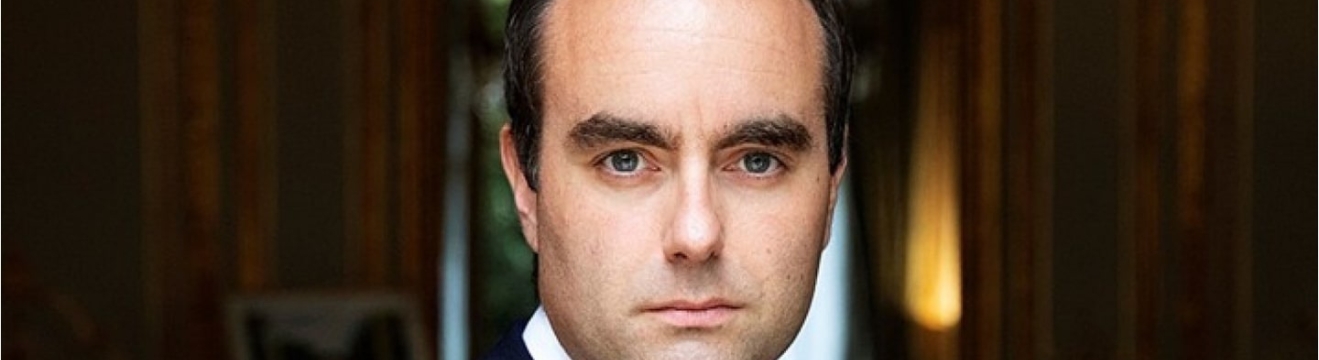
French PM Sebastien Lecornu (Source: French government)
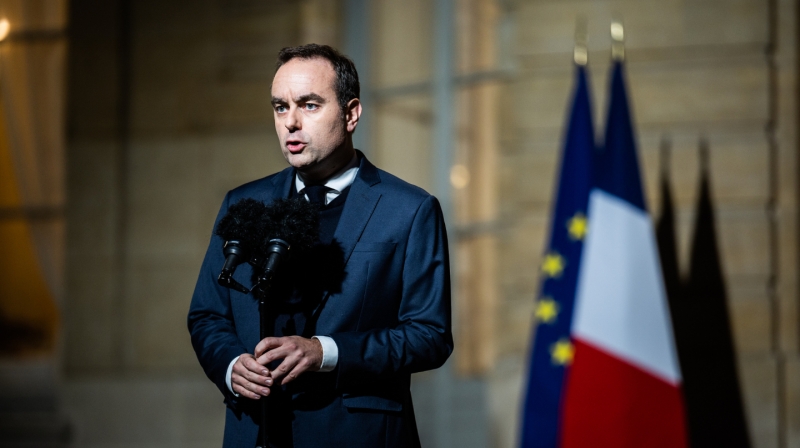
French PM Sebastien Lecornu
(Source: French Government)
(Source: French Government)
GOVERNING BY 49,3 CONSTITUTIONAL TOOL : FRANCE’S UNEASY NORMAL
On Monday 19 January 2026, Prime Minister Sebastien Lecornu announced that he would engage the government’s responsibility on the draft finance bill for 2026, turning to Article 49, paragraph 3 of the French Constitution to secure the adoption of the budget. This decision came after more than 350 hours of parliamentary debate, during which the promise to “change method” and avoid 49.3 collided with the reality of an Assembly unable to converge on a compromise. Prime Minister Lecornu himself summed up the outcome with rare candour, describing the budgetary sequence as a “semi success, semi failure,” a formula that reflects both the technical progress made and the political cost of forcing the text through. (Source, Prime Ministry, Matignon)
On Monday 19 January 2026, Prime Minister Sebastien Lecornu announced that he would engage the government’s responsibility on the draft finance bill for 2026, turning to Article 49, paragraph 3 of the French Constitution to secure the adoption of the budget. This decision came after more than 350 hours of parliamentary debate, during which the promise to “change method” and avoid 49.3 collided with the reality of an Assembly unable to converge on a compromise. Prime Minister Lecornu himself summed up the outcome with rare candour, describing the budgetary sequence as a “semi success, semi failure,” a formula that reflects both the technical progress made and the political cost of forcing the text through. (Source, Prime Ministry, Matignon)
A “SEMI-SUCCESS, SEMI” PM LECORNU ADMITED
From the outset, Lecornu acknowledged that the use of 49.3 contradicted his initial commitment to break with the habitual resort to this constitutional weapon. He insisted that the method had “worked” for the Social Security budget and had helped restore “seriousness and calm” to political life, but he conceded that he had not managed to avoid 49.3 for the State budget despite this change of style. In his own analysis, the Prime Minister underlined a paradox: for months, abandoning 49.3 was presented as a condition for finding a budgetary compromise, yet “for several days” it appeared that 49.3 had become, on the contrary, the condition for having any budget at all, a shift that he described with a mix of humility and stubborn determination.
From the outset, Lecornu acknowledged that the use of 49.3 contradicted his initial commitment to break with the habitual resort to this constitutional weapon. He insisted that the method had “worked” for the Social Security budget and had helped restore “seriousness and calm” to political life, but he conceded that he had not managed to avoid 49.3 for the State budget despite this change of style. In his own analysis, the Prime Minister underlined a paradox: for months, abandoning 49.3 was presented as a condition for finding a budgetary compromise, yet “for several days” it appeared that 49.3 had become, on the contrary, the condition for having any budget at all, a shift that he described with a mix of humility and stubborn determination.
DEFICIT REDUCTION & FISCAL STABILITY
Beyond the controversy around the procedure, French PM Lecornu reiterated the central objective of his budgetary policy: bringing the public deficit back to 5% of GDP in 2026. He argued that “the credibility of France’s signature” depends on this promise, linking the country’s word to its ability to reassure international partners and maintain economic stability. To support this effort while avoiding a new shock for taxpayers, the Prime Minister stressed that household taxes will not increase next year and that 99.9% of existing tax schemes for businesses will be maintained, a way of guaranteeing visibility for both citizens and economic actors.
Beyond the controversy around the procedure, French PM Lecornu reiterated the central objective of his budgetary policy: bringing the public deficit back to 5% of GDP in 2026. He argued that “the credibility of France’s signature” depends on this promise, linking the country’s word to its ability to reassure international partners and maintain economic stability. To support this effort while avoiding a new shock for taxpayers, the Prime Minister stressed that household taxes will not increase next year and that 99.9% of existing tax schemes for businesses will be maintained, a way of guaranteeing visibility for both citizens and economic actors.
HOW POWERFUL ARTICLE 49.3 OPERATES IN FRENCH CONSTITUTION
French Prime Minister Sebastien Lecornu’s decision means, very concretely, that the government is activating the procedure provided for by Article 49, paragraph 3 of the Constitution to adopt the 2026 budget. After deliberation in the Council of Ministers, the Prime Minister can commit the government’s responsibility on a finance bill; from that moment, the text is considered adopted without a vote unless a motion of censure is tabled within 24 hours and then approved by an absolute majority of deputies. If such a motion is adopted, the budget is rejected and the government falls; if it is rejected or not adopted, the budget is deemed approved, and only the votes in favour of the motion of censure are counted to determine whether the government is overturned.
French Prime Minister Sebastien Lecornu’s decision means, very concretely, that the government is activating the procedure provided for by Article 49, paragraph 3 of the Constitution to adopt the 2026 budget. After deliberation in the Council of Ministers, the Prime Minister can commit the government’s responsibility on a finance bill; from that moment, the text is considered adopted without a vote unless a motion of censure is tabled within 24 hours and then approved by an absolute majority of deputies. If such a motion is adopted, the budget is rejected and the government falls; if it is rejected or not adopted, the budget is deemed approved, and only the votes in favour of the motion of censure are counted to determine whether the government is overturned.
A PROCEDURE FRAMED, BUT CONTESTED
The use of 49.3 also has immediate procedural consequences in the Assembly. Once the Prime Minister engages the government’s responsibility, discussion of the bill is suspended, and parliamentary time shifts to the possible examination of motions of censure rather than the content of the budget itself. Since the constitutional revision of 23 July 2008, the government can still resort to 49.3 freely on finance bills and social security financing bills, but it can only use it once per session on one other text, a way of limiting a tool that was used 39 times between 1988 and 1993.
The use of 49.3 also has immediate procedural consequences in the Assembly. Once the Prime Minister engages the government’s responsibility, discussion of the bill is suspended, and parliamentary time shifts to the possible examination of motions of censure rather than the content of the budget itself. Since the constitutional revision of 23 July 2008, the government can still resort to 49.3 freely on finance bills and social security financing bills, but it can only use it once per session on one other text, a way of limiting a tool that was used 39 times between 1988 and 1993.
MOTIONS OF CENSURE FROM BOTH EXTREMES
French Prime Minister Sebastien Lecornu’s announcement immediately prompted reactions from the opposition, particularly at the two ends of the political spectrum. On the left, La France insoumise, (LFI, Jean Luc Melenchon’s Far Left party) along with ecologists and communists, decided to file motions of censure against the government, denouncing the recourse to 49.3 as a sign of democratic impasse. On the right, the Rassemblement National (RN, National Rallye, Marine Lepen’s and Jordan Bardella’s Far Right Party) also announced its own censure motion, with Marine Le Pen declaring that her group would “obviously” seek to bring down the government and calling on deputies who had promised to lower taxes and restore public finances to assume their responsibilities.
French Prime Minister Sebastien Lecornu’s announcement immediately prompted reactions from the opposition, particularly at the two ends of the political spectrum. On the left, La France insoumise, (LFI, Jean Luc Melenchon’s Far Left party) along with ecologists and communists, decided to file motions of censure against the government, denouncing the recourse to 49.3 as a sign of democratic impasse. On the right, the Rassemblement National (RN, National Rallye, Marine Lepen’s and Jordan Bardella’s Far Right Party) also announced its own censure motion, with Marine Le Pen declaring that her group would “obviously” seek to bring down the government and calling on deputies who had promised to lower taxes and restore public finances to assume their responsibilities.
A BUDGET DEFENDED BY THE FRENHPRESIDENT MACRON
While the Assembly braces for these censure attempts, President Emmanuel Macron has chosen to present the budget as a coherent and responsible compromise. According to remarks reported by government spokesperson Maud Bregeon, he praised a “budgetary equation” that keeps the deficit at 5% of GDP, guarantees stability and remains consistent with the economic policy pursued in recent years, describing the result as “a copy that allows the country to move forward.” Macron argued that the roadmap has been fulfilled and must now be collectively defended, highlighting elements of economic stimulus, increased defence spending and a more targeted surtax on large companies than in 2025, affecting a smaller number of firms. (Source French Presidency Elysee)
While the Assembly braces for these censure attempts, President Emmanuel Macron has chosen to present the budget as a coherent and responsible compromise. According to remarks reported by government spokesperson Maud Bregeon, he praised a “budgetary equation” that keeps the deficit at 5% of GDP, guarantees stability and remains consistent with the economic policy pursued in recent years, describing the result as “a copy that allows the country to move forward.” Macron argued that the roadmap has been fulfilled and must now be collectively defended, highlighting elements of economic stimulus, increased defence spending and a more targeted surtax on large companies than in 2025, affecting a smaller number of firms. (Source French Presidency Elysee)
AN OPEN BUT CONSTRAINED STYLE OF GOVERNANCE
Despite the use of a highly vertical instrument, PM Sebastien Lecornu continues to present himself as the advocate of a more open and inclusive method of governance. He has reaffirmed his ambition to involve local authorities and social partners more closely in the implementation of budgetary and economic choices, signaling that 49.3 should not become the default mode of decision making. At the same time, his own remarks about the “impasse” reached in the Assembly suggest that this openness will have to coexist with a political landscape where no stable majority exists, forcing the executive to oscillate between dialogue and constitutional force.
Despite the use of a highly vertical instrument, PM Sebastien Lecornu continues to present himself as the advocate of a more open and inclusive method of governance. He has reaffirmed his ambition to involve local authorities and social partners more closely in the implementation of budgetary and economic choices, signaling that 49.3 should not become the default mode of decision making. At the same time, his own remarks about the “impasse” reached in the Assembly suggest that this openness will have to coexist with a political landscape where no stable majority exists, forcing the executive to oscillate between dialogue and constitutional force.
By admitting that the 2026 budget is both a “semi success” and a “semi failure,” Sebastien Lecornu has offered a rare, almost clinical diagnosis of the current French situation. The government maintains its commitment to deficit reduction and fiscal stability, keeps taxes broadly unchanged and secures the adoption of the budget, but only at the cost of a procedure that suspends debate and concentrates power in the hands of the executive. Between motions of censure from both far left and far right, a president who defends “a copy that allows the country to move forward,” and a Prime Minister torn between openness and constraint, France again finds itself questioning how governable it really is under a fragmented Assembly and a Constitution that still gives the last word to Article 49.3 (Source: Matignon
Liability for this article lies with the author, who also holds the copyright. Editorial content from USPA may be quoted on other websites as long as the quote comprises no more than 5% of the entire text, is marked as such and the source is named (via hyperlink).