News
Iran at the Edge of Change as a Nation Moves With Intent, Not Emotion
Iran at the Edge of a Historic Shift
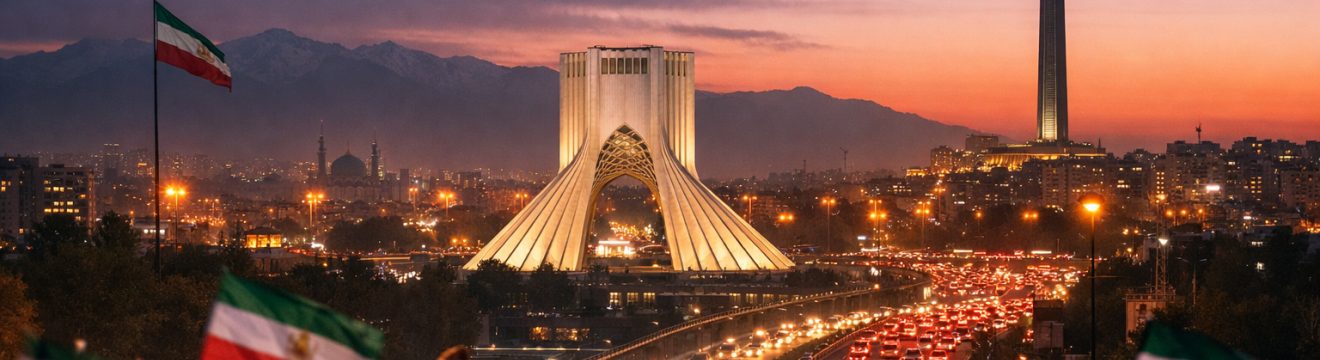
From Economic Collapse to Political Resolve: Iran (Source: Saman Hajibabaei )
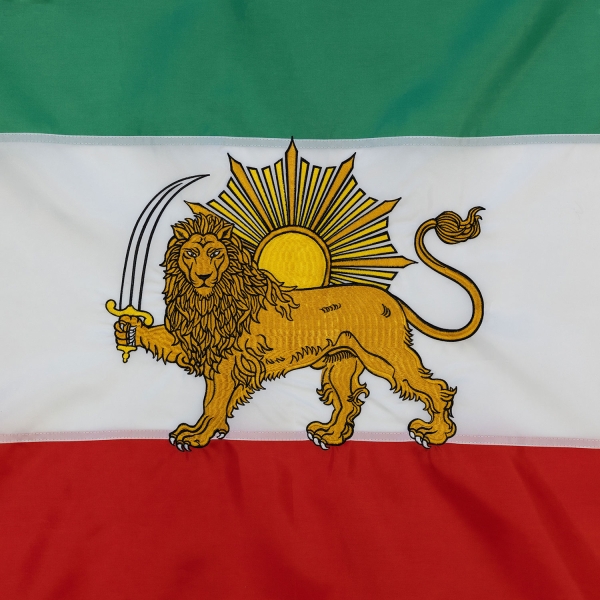
A Different Sound From Iran’s Streets
(Source: Saman Hajibabaei )
(Source: Saman Hajibabaei )
Across several cities, reports emerging from inside the country suggest a wave of public mobilization that differs sharply from previous protest cycles.
This time, observers note, the streets are not filled with celebration, chants of excitement, or spontaneous outbursts. Instead, what is being described is something colder, quieter, and more deliberate a population moving with apparent resolve rather than emotion.
According to multiple eyewitness accounts, the trigger was economic.
On December 28, 2025, Iran’s national currency experienced a sharp and alarming decline, described by local sources as resembling a moment of economic free fall rather than routine volatility.
The collapse appears to have hit Iran’s commercial heart particularly hard.
Merchants and shop owners in Tehran’s Grand Bazaar traditionally cautious and politically restrained reportedly halted normal activity.
For many, this sector has long served as a silent barometer of systemic stability.
This time, sources indicate, tolerance reached its limit.
What is unfolding does not resemble a spontaneous protest. It resembles continuation.
Observers inside Iran draw direct parallels to the protest waves of 2016, 2019, and 2022, suggesting that the current movement is not a new eruption, but an unfinished chapter. The language, the timing, and the restraint point to a society that believes it has unresolved business with power.
A Clear Target, Not a General Demand
One striking feature repeatedly emphasized in reports is the clarity of slogans. Unlike earlier moments where demands varied or remained fragmented, current chants appear sharply focused.Rather than abstract calls for reform, demonstrators are said to be directly targeting the apex of political authority including explicit references to Supreme Leader Ali Khamenei.
Equally notable is what many analysts consider unprecedented: within less than 48 hours, protesters across multiple regions reportedly converged on a single name.
From Tehran, Kerman, Hamedan, Malard, Qeshm, and Kish, eyewitnesses describe crowds chanting the name Reza Pahlavi, son of Iran’s last monarch.
For the first time in years, the name is not appearing as a marginal or nostalgic reference, but as a unifying symbol one that many inside Iran interpret as representing leadership, continuity, and an alternative national trajectory.
The symbolism is difficult to ignore.
Beyond Protest: Signs of Collective Decision
Political analysts caution against premature conclusions. However, several elements distinguish this moment:The absence of celebratory behavior
The speed of narrative convergence
The participation of economically conservative groups
The direct personalization of political accountability
Taken together, these factors suggest something more consequential than episodic unrest.
As one Tehran based source reportedly put it:
This does not feel like anger.
It feels like a decision.
Whether this moment will escalate, consolidate, or be suppressed remains uncertain.
What is clear, however, is that the sound coming from Iran’s streets has changed.
It is quieter and therefore, potentially more dangerous for the existing order.
For Western audiences accustomed to interpreting Iranian protests through cycles of eruption and repression, this development presents a challenge: calm should not be mistaken for hesitation, and restraint should not be confused with retreat.
History shows that when a society stops shouting and starts moving with intent, it may already be crossing a point of no return.
Why Many Iranians Look to Reza Pahlavi A Respectful and Convincing Explanation
Across the recent waves of protest and civic mobilization within Iran, one name has emerged repeatedly in public chants and discourse:Reza Pahlavi.
For many protesters particularly those advocating secular democracy, individual freedoms, and an open society this is not a nostalgic cry for a return to the past, but an expression of hope for a future grounded in dignity, pluralism, and national unity.
There are several key reasons why significant segments of the Iranian public and diaspora see Pahlavi as a figure of unifying potential:
1. A Longstanding Advocate for Secular Democracy and Human Rights
Reza Pahlavi has spent over four decades promoting the principles of freedom, democracy, and human rights for Iran. Even in exile, he has consistently articulated a vision for a future Iranian government that respects the rule of law, equality before the law, and individual liberties including separation of religion and state as essential foundations for national renewal.
2. A Symbol of National Identity Beyond Sectarian or Factional Divides
While rooted in the historical legacy of the Pahlavi dynasty, Pahlavi’s current stance is not about restoring monarchy as an institution, but about enabling a democratic process determined by the Iranian people themselves. He has publicly stated that the choice of political system should be decided through free and fair referendum whether that leads to a constitutional monarchy or a republic.
3. A Call for Inclusive Transition and Reconciliation
Analysts and observers note that Pahlavi advocates for a transitional framework that brings together activists, professionals, ethnic minorities, and civil society stakeholders in preparation for a democratic future.
This approach emphasizes non-violence, legal due process, and the protection of rights for all citizens commitments that resonate with many Iranians tired of decades of repression and polarization.
While rooted in the historical legacy of the Pahlavi dynasty, Pahlavi’s current stance is not about restoring monarchy as an institution, but about enabling a democratic process determined by the Iranian people themselves. He has publicly stated that the choice of political system should be decided through free and fair referendum whether that leads to a constitutional monarchy or a republic.
3. A Call for Inclusive Transition and Reconciliation
Analysts and observers note that Pahlavi advocates for a transitional framework that brings together activists, professionals, ethnic minorities, and civil society stakeholders in preparation for a democratic future.
This approach emphasizes non-violence, legal due process, and the protection of rights for all citizens commitments that resonate with many Iranians tired of decades of repression and polarization.
4. Appeal Across Generations and Political Orientations
Though he remains a polarizing figure in some circles, Pahlavi’s messaging has found appeal among diverse groups from liberals who prioritize individual rights to nationalists who desire Iran’s reintegration into the international community.
His focus on democratic norms rather than coercive authority provides a rallying point for Iranians seeking systemic change without sectarian or ideological exclusion.
5. A Vision That Aligns With Global Democratic Principles
For many Iranians and international observers alike, Pahlavi’s emphasis on territorial integrity, equal citizenship, rule of law, and peaceful transition aligns closely with broadly accepted democratic values.
This alignment makes his platform understandable and relatable to Western audiences including in the United States, Europe, and Germany and reinforces his role as a bridge between Iranian aspirations and global democratic norms.
Though he remains a polarizing figure in some circles, Pahlavi’s messaging has found appeal among diverse groups from liberals who prioritize individual rights to nationalists who desire Iran’s reintegration into the international community.
His focus on democratic norms rather than coercive authority provides a rallying point for Iranians seeking systemic change without sectarian or ideological exclusion.
5. A Vision That Aligns With Global Democratic Principles
For many Iranians and international observers alike, Pahlavi’s emphasis on territorial integrity, equal citizenship, rule of law, and peaceful transition aligns closely with broadly accepted democratic values.
This alignment makes his platform understandable and relatable to Western audiences including in the United States, Europe, and Germany and reinforces his role as a bridge between Iranian aspirations and global democratic norms.
Conclusion: A Symbol of Hope and Transition
For those taking to the streets under conditions of severe political repression and economic hardship, chanting the name of Reza Pahlavi reflects not merely nostalgia, but a collective desire for a clear and dignified way forward one grounded in human rights, legal protections, and the sovereign choice of the Iranian people.In a moment when many feel that the existing system has exhausted its legitimacy, the resonance of this name can be interpreted as a call for inclusive, democratic transition rather than a longing for a bygone era.
Whether Pahlavi ultimately plays a formal role in Iran’s future political structure or serves as a symbolic focal point for broader civic aspirations, the prominence of his name in recent protests underscores a profound shift in public consciousness: a widespread yearning for a future defined by freedom, justice, and national dignity.
more information: https://www.bybobs.de
Liability for this article lies with the author, who also holds the copyright. Editorial content from USPA may be quoted on other websites as long as the quote comprises no more than 5% of the entire text, is marked as such and the source is named (via hyperlink).